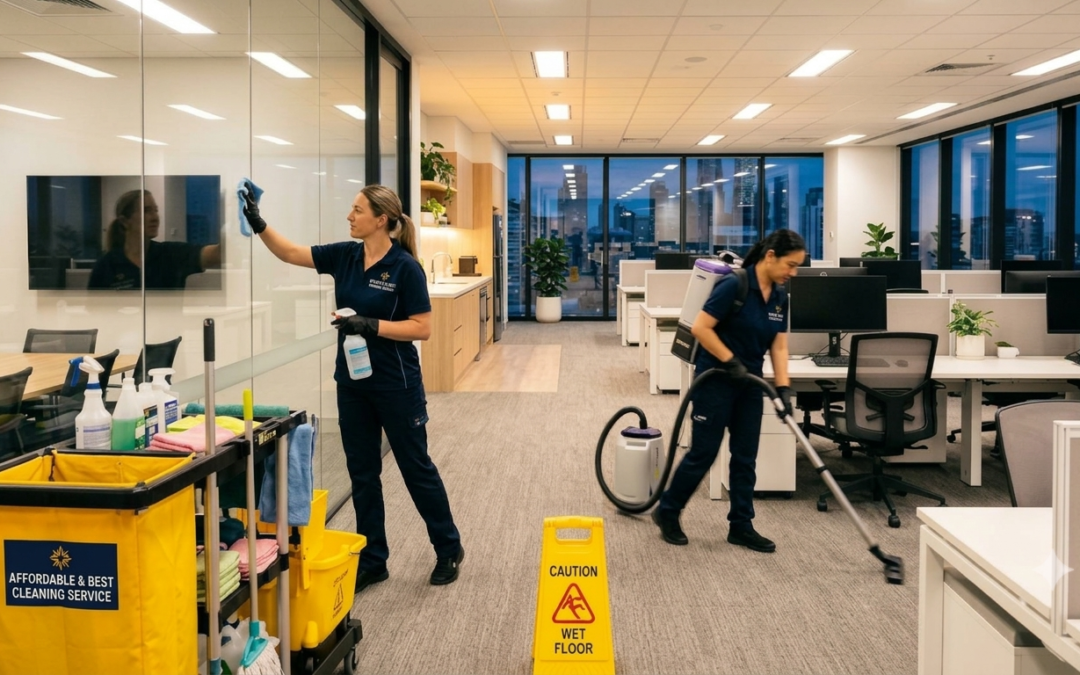
Keeping your office clean can help improve your employee’s morale, create a better impression with clients and reduce sickness. However, many small businesses lack organisation when it comes to maintaining a clean workplace. You may have overflowing bins, a sticky kitchen and a graying carpet at your entrance. Using a checklist will make it simple to know what needs to be done, when it needs to be done and who it needs to be done by.
This guide provides you with a full office cleaning checklist for Australian workplaces. The checklist is divided into three sections; daily, weekly and monthly. We have also included more specific details for your kitchens, bathrooms, meeting rooms and floors. We are a local cleaning company based in Melbourne called Afford & Best Cleaning and the tasks below reflect what we do on site each week. This checklist can be used as it is or can be adjusted to fit your space.
What Is an Office Cleaning Checklist?
An office cleaning check list will contain all the tasks you need to complete and will be organised according to how regularly they are completed and what area of the office they relate to. This will ensure that everyone knows how to keep the space clean without any confusion.
A good office cleaning check list will include:
Tasks – What needs to be cleaned (desks, door handles, carpets, windows etc)
Frequency – How often the task should be completed (daily/weekly/monthly/quarterly)
Who – Who should complete the task (staff member, internal cleaner, external company)
Sign off – A simple tick or initial.
You can have an office cleaning check list in a physical format and leave it near your kitchen area. You can also add it to a spreadsheet or pass it onto your cleaning provider.
Why Every Workplace Needs an Office Cleaning Checklist
Whilst it may seem like a quick clean up is enough, having an office cleaning checklist can help to solve various issues:
Healthier Staff – Shared equipment such as keyboards, telephones, taps and door handles can all be a breeding ground for germs. Having a regular clean reduces the chances of people catching illnesses.
Improved First Impressions – Often when clients, visitors and prospective employees visit your business, they will form an opinion within seconds. Having a clean reception and meeting room means your business looks professional.
Increased Productivity – A clean and uncluttered workspace will make people more focused and feel more comfortable.
Longer Lasting Furniture/Flooring – Regular maintenance will mean your carpets, chairs and surfaces last longer.
Everyone Knows What They Need To Do – Nobody will have any awkward arguments about who needs to do what.
Compliance – You’ll have a routine in place to ensure your floors are kept dry, walkways clear and bathrooms stocked to keep your work place healthy and safe.
Many business owners tell us that the main benefit of having an office cleaning checklist is that it gives them peace of mind. Once you have it on paper, your office will look after itself.
Before You Start: What to Include in Your List
- Before creating your office cleaning checklist, take a quick tour of your office space and consider:
- How busy your office is throughout the day and how many people use the office.
- Which areas of your office are most heavily used (reception, kitchen etc.)
- What type of surfaces you have in your office (carpeted, hard floors, glass, wood).
- Any areas that may require more attention (server room, medical area).
- What is realistic for your team to complete and any areas you would need to employ outside help.
A small office with 5 staff members will require a much simpler office cleaning checklist than a busy open plan office. During your office tour, decide what tasks need to be completed daily and which can be added into your weekly or monthly checklist.
Daily Office Cleaning Checklist
These tasks will ensure your office is kept looking nice and will help avoid dirt from building up. The tasks are quick and will have the biggest impact.
- Empty all bins and change liners
- Wipe down desks, tables and communal areas
- Disinfect high touch areas like door handles, light switches, lift buttons and phones
- Wipe down kitchen bench tops, sink and microwave
- Wash cups and plates or use dishwasher
- Vacuum high traffic areas and sweep/mop harder surfaces
- Clean toilets and stock up with soap, paper towels and toilet paper
- Wipe any spillages straight away to avoid slips
- Neaten up reception and meeting rooms
- Remove food waste to avoid smells and pests
Ask your team to tidy up their own desk if you have a small team. This makes the whole process quicker and more efficient.
Weekly Office Cleaning Checklist
The weekly tasks will be slightly more detailed than the daily tasks and will ensure areas that are not cleaned daily are kept looking tidy.
- Dusting of desks, shelves, monitors, window sills and blinds
- Wipe down computers, keyboards and mouse using appropriate wipes
- Mop and disinfect all hard flooring
- Vacuum all carpets – including under desks and around edges.
- Clean glass doors, reception desk and mirrors.
- Wipe handle of fridge and clear old food on specific day.
- Scrub floors, toilets, basins and taps in bathroom.
- Empty and sanitize recycling bin and waste bin.
- Clean microwave and dishwasher.
- Check that you have all your cleaning items such as soap, tissues, paper towels and cleaning products.
- Set a specific day for example Friday afternoon to ensure it is a regular task.
Monthly and Quarterly Office Cleaning Checklist
Monthly and quarterly tasks deal with the build-up of dirt and dust. These can easily be forgotten so make sure to add them into your calendar.
Monthly:
- Dust ceiling fans, air vents and light fittings
- Wipe inside of windows and window frames
- Wipe skirting boards, doors, and any areas with marks on walls
- Thoroughly clean kitchen area (oven, fridge and cupboards)
- Disinfect chairs. Focus on fabric ones as dust and spills can build up
- Check and clean air con filters
Quarterly or Half-Yearly:
- Professional steam clean carpets
- Clean upholstery, sofas and waiting room chairs
- Clean tiles and grouting in bathrooms and kitchens
- Clean windows completely
- Check for pests. Look in hard to reach areas like behind appliances
- Review and update your cleaning checklist and stock
These tasks will be the most beneficial to have professionals carry out in most offices. The equipment and knowledge they have will make a big difference.
Office Cleaning Checklist by Area: Kitchen, Bathrooms and Meeting Rooms
There are some areas where extra attention should be paid. Below is a list of some key areas.
Kitchen and Break Room
- This can often be the most used room within an office. Here are some things to do,
- Clean off the bench tops, tables and chairs after lunch.
- Clean the sink, taps and drain.
- Wipe down the microwave, kettle and coffee machine.
- Empty and clean out the fridge once a week. Wipe down the shelves.
- Empty the bin each day to avoid smell.
Bathrooms
- Keeping bathrooms clean will reflect upon your business,
- Disinfect toilets, urinals, basins & taps.
- Clean mirrors & surfaces.
- Top up the soap, paper towels and toilet paper.
- Mop the floor using an appropriate disinfectant.
- Empty sanitary bins as required.
Meeting Rooms & Reception
- These will be the first areas visitors see so you want them to look nice,
- Wipe down tables, chairs & whiteboards.
- Clean glass, screens & remotes.
- Vacuum the floor and clear away rubbish.
- Tidy chairs and organise magazines / brochures.
- Wipe down the reception desk, phones & pens.
Open Plan Work Areas
- Regularly empty and wipe down desks.
- Dust monitors, desk dividers & shelves.
- Vacuum under desks and between workstations.
- Clean shared printers, copiers & phones.
Floors and Carpets in Busy Offices
Floors are subject to the most wear and tear in the workplace due to high footfall, spilt coffee and wheeled chairs.
Carpet Cleaning – daily vacuuming will remove surface dirt however deep cleaning with a professional steam clean is required every 6-12 months to clean out the carpets and remove dirt, smells and allergens to increase the lifespan of the carpet. If you’re unsure whether to choose steam cleaning or dry cleaning for your office we have an article showing the difference between the two methods. We also have an article on how long a carpet will take to dry after being professionally cleaned so you can time this around staff hours. Many offices use this as a weekend service.
Hard Floor and Tiles – Clean with a suitable cleaner. It is important to clean the grout lines in kitchen and bathrooms to prevent build up of dirt. A professional tile and grout clean will keep them looking clean and hygienic.
Doormats – Place doormats both inside and outside the doorway to catch any grit and water.
Health, Safety and Productivity
Having a clean and hygienic place of work will help your team in many ways you would not expect. Dust, mould and bacteria can affect the air quality causing allergies and illness. Wet floors and clutter can cause accidents to happen. Whilst a dirty desk can make it harder to concentrate.
- Having an organised office cleaning list will help by:
- Reducing the spread of cold and flu within your staff.
- Reduce dust which causes allergies/asthma.
- Prevent slips, trips and falls.
- Control smells, pests and mould.
- A more relaxed and focused atmosphere.
Using environmentally friendly products where possible is a good idea, especially in communal areas where people may be sensitive to harsh chemicals.
Tips to Keep Your Cleaning Routine on Track
Once you have created your list of tasks for cleaning your office, it is important to be a bit organised when putting them into practice. Here are some tips to help:
- Give each task a title/role
- Display your list somewhere visible like the kitchen or team channel
- Keep things simple – a short list that is completed will make more of a difference than a long list that isn’t.
- Make sure you have the correct cleaning materials available. Have your cleaning products, gloves, cloths and bin bags easily available.
- Encourage everyone to clean as they go. Ask everyone to wipe their desk, wash their mug and take their rubbish.
- Review your list every few months. Add or remove tasks depending on what is happening in your office.
- Quickly review your list weekly to keep standards high.
Common Office Cleaning Mistakes to Avoid
- Even with good intentions, mistakes can happen when using an office cleaning checklist. Be aware of these common mistakes:
- Not cleaning touch points such as door handles, phones and keyboards which are some of the dirtiest areas in the office.
- Using the same cloth throughout. This spreads germs from the bathroom to the kitchen.
- Not cleaning your carpets. There may not be much visible but often the deep clean is missed.
- Only relying on staff. Staff will have their own work to complete and may rush through cleaning.
- Mixing cleaning products. This can cause dangerous fumes.
- No cleaning products in the bathroom. The quickest way to lose confidence from your visitors is to have an empty soap dispenser!
DIY or Professional Help With Your Office Cleaning Checklist
Although there is no need to stick to one extreme, most of the most successful offices will use a combination of in-house work and outsourced services. Some tasks that are good to do yourself:
- Cleaning personal desks
- Washing cups and cleaning the kitchen
- Emptying small bins
- Cleaning meeting rooms
- Some tasks that are best to outsource to a professional office cleaner:
- Daily/Weekly cleans – including floor, bathrooms and kitchens
- Steam cleaning carpets/upholstery
- Deep cleaning tiles/grout
- Cleaning windows and high reach dusting
- Lease end cleans.
- Cleans after fit out/building works.
The benefits of having a professional team is that you will be using trained staff who will have the right equipment for commercial use. This means your staff will be able to get onto the real job at hand. Many will start with a weekly clean and then add deep cleans quarterly.
What To Look For In A Service Provider
If you decide that you want to outsource this work, there are some key things to consider:
- Are the cleaners trained and insured?
- Are they able to come out of hours (early mornings/evenings)?
- Do they offer flexible cleaning times (daily/weekly one offs)?
- What products and equipment do they use? Are they safe for your staff?
- Will they use the office cleaning checklist you provide or do they have their own?
- Do they offer guarantee of satisfaction or re clean?
- Can they do additional services such as carpets, windows and tiles?
A good provider will be able to answer these questions and be happy to make changes to fit your requirements.
Why Choose Afford & Best Cleaning For Office Cleaning In Melbourne?
We have been providing Office cleaning services for businesses across Melbourne for years. We utilise professional equipment and eco-friendly products to give you a clean, healthy and professional working environment. Our team provide our services across Tarneit, Wollert, Clyde and surrounding areas.
When you choose our office cleaning services you will receive:
- Qualified and insured cleaners who will look after your workplace.
- Customised cleaning schedule based on your office cleaning checklist.
- Using safe and eco-friendly products to keep your staff and visitors safe.
- Deep cleaning of your carpets, tiles and upholstery.
- We guarantee a free re clean if you are not satisfied.
- Same day service if you are short on time.
We can help with your office cleaning checklist no matter how big or small your space is. We will complete your office cleaning checklist with you and complete any tasks your team may not want to do.
Final Thoughts
Keeping a clean workspace is very easy to achieve. Simply having a clear schedule, easy habits and the right support at the right time. Start by creating an office cleaning checklist including daily tasks. Then move onto weekly and monthly. Finally contact professionals to deep clean your office with proper equipment.
Having a practical office cleaning checklist on your wall will ensure your office is kept fresh, your staff are kept healthy and your clients will notice the difference when they arrive. Get in touch with Afford & Best Cleaning today to get a free, no obligation quote.
Frequently Asked Questions
What areas do we need to clean?
Your office cleaning checklist should include daily cleaning tasks such as bin emptying and surfacing, weekly such as vacuuming and mopping and monthly/quarterly such as carpet cleaning and windows. We recommend listing any high frequency areas, bathrooms, kitchen and meeting rooms.
How often should we clean our office?
Most offices will require a light clean everyday, deeper clean weekly and a professional deep clean every few months. Some busy offices, kitchens and areas with high visitor numbers may require more regular cleaning.
How often should we update our office cleaning checklist?
We would recommend updating your checklist every 3-6 month or when any changes happen within your office. If you have more staff, moved premises or noticed any problem areas then you can update your list.
Who cleans the office?
It depends on your business. Generally staff will be responsible for their own desk and the kitchen however the floor, bathrooms and deep cleaning will be done by a cleaner or cleaning company. Including this in your list will help to avoid confusion.
Should we use a professional office cleaner?
Yes, for most businesses! They will have commercial cleaning equipment, work to a schedule and will do the heavy lifting such as carpets and tiles. It also means your team can concentrate on their work.
Can we have our office cleaning done out of hours?
Yes, many cleaning companies will work early in the morning, late or at the weekend meaning there will be no disruption to your staff or clients. Especially useful if you need carpet cleaning as it gives time for drying.
Where is the dirtiest area in an office?
Areas that are touched by many people such as keyboards, telephones, handles, kitchen taps, fridge handles and printers. Regularly disinfecting these areas will help reduce the spread of germs.