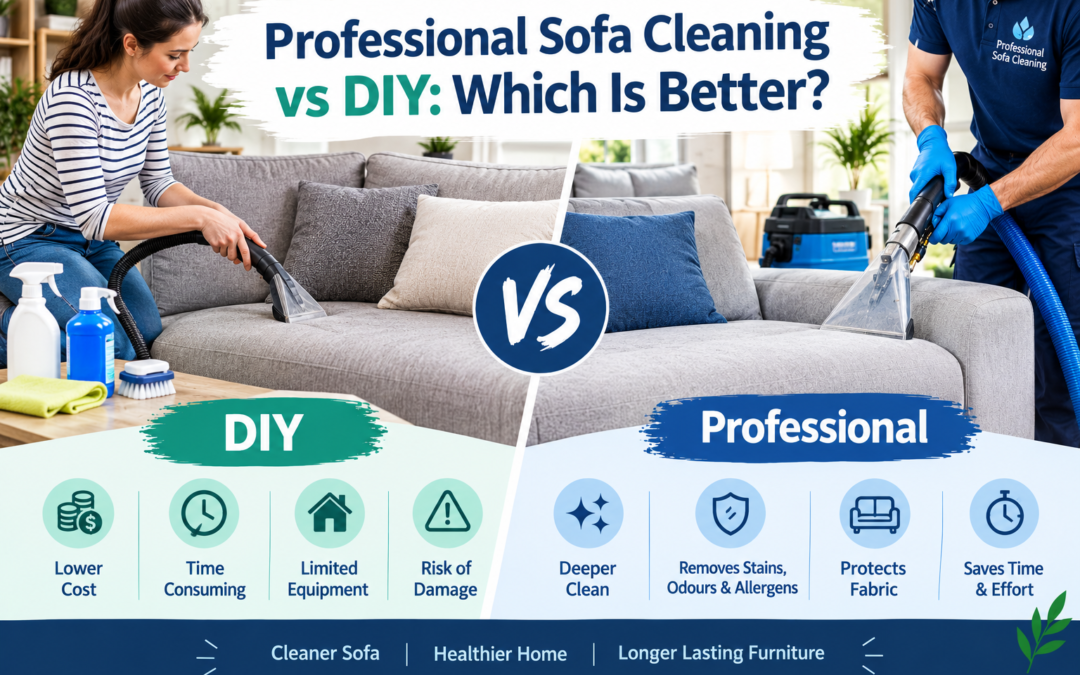
Sofas are used numerous times in a day, and eventually they can become dull due to the buildup of dirt and stains. Food crumbs, stains, and spills will ruin all of your hard work in entertaining guests, and even the most carefully cleaned sofas can become a breeding ground for hidden germs. Often times, sofa owners must choose between professional cleaning or the much less expensive, yet less effective DIY cleaning.
Before choosing a cleaning method, owners should consider the type of fabric used in the stain, severity of the stain, and the sofa’s overall level of cleanliness. Routine fabric cleaning should be handled with DIY cleaning techniques; however, stain removal from heavily soiled fabric usually requires professional cleaning.
The goal of this article is to weigh the pros and cons of the cost, cleaning results, safety, convenience, and DIY vs professional upholstery cleaning. We evaluate the overall quality of each option. By comparing the two, we help determine which sofa cleaning method is right for your home.
What is Professional Sofa Cleaning?
Professional sofa cleaning uses special equipment and cleaning supplies to clean sofas. Professionals use a combination of dry, steam, or low moisture cleaning methods. Fabric identification and stain inspection helps a professional decide the best cleaning method for the specific fabric.
Professional cleaning of sofas includes:
- Vacuuming
- Fabric inspection
- Spots and stain treatments
- Application of cleaning products
- Deep cleaning
- Dirt and moisture extraction
- Treatment of odors
- Inspection of cleaning work
The cleaning method professionals use is dependent on the fabric and state of the sofa.
What Is DIY Sofa Cleaning?
DIY sofa cleaning involves cleaning the sofa yourself by using eqipment and supplies such as vacuum cleaners, microfiber cloths, commercial upholstery cleaners, and cleaning small spills.
Basic maintenance can include vacuuming your sofa regularly and possibly wiping spills that occur in between professional cleanings.
DIY cleaning is appropriate for the following tasks:
- Removing surface dust
- Removing minor stains
- Cleaning fresh surface spills
- Removing crumbs and surface pet hair
DIY cleaning has its limitations. For one, household equipment lacks the cleaning power of professional equipment.
The main difference between the two methods is the depth to which cleaning can be done.
Professional Sofa Cleaning vs DIY Sofa Cleaning
Professional cleaning service technicians:
- have their own cleaning equipment and solutions to clean fabric;
- have different methods for removing stains;
- know methods to manage the levels of moisture while cleaning;
- know how to deal with heavily soiled stains;
- have equipment for cleaning fabric;
- have the ability to remove water and dirt from fabric extractors.
DIY cleaning, on the other hand, uses:
- household cleaning equipment;
- some knowledge and methods for cleaning;
- some products sold at stores;
- internet knowledge for cleaning methods.
For the very basic cleaning, DIY may work. For a professional cleaning though, a service is preferable.
Cleaning Results
First and foremost, how effective cleaning is will determine satisfaction.
DIY cleaning can remove surface dirt, dust, some stains, but deeper stains and dirt will still be embedded in the fabric.
With professional cleaning, equipment has the ability to reach deeper in the fabric and remove dirt and moisture that is more efficiently extracted by professional cleaning equipment compared to household cleaning equipment.
For example, if there is a very soiled sofa with dirt buildup, old stains, or smells and even heavily used, a deep cleaning from a professional will give better results than a surface cleaning.
Time and Convenience
DIY cleaning involves more of your time, effort, and steps.
Cleaning will involve:
- vacuuming,
- identifying the stain,
- finding and selecting a cleaning product,
- testing the selected cleaning product,
- applying the cleaning product,
- steaming and/or scrubbing and/or using your tub vacuum to remove excess moisture,
- allowing the cleaning workspace to (literally) ‘air’ dry.
A DIY cleaning would not be that much of a problem on a small sofa, but a large sofa will definitely take a lot more time and effort.
When you use a sofa cleaning service, the worker cleans the sofa for you, making it a good choice for busy households.
Equipment and Cleaning Technology
Cleaning equipment makes a big difference, and could affect how much you clean. A vacuum mainly helps remove surface debris and dirt, but can’t clean dirt that has been embedded in the fabric. Professional upholstery cleaners use different types of machinery made to be more efficient upholstery cleaning machines. Based on the material, a cleaning process may use special techniques such as extraction.
While DIY equipment is not as effective as professional equipment, a vacuum is still good for regular cleaning.
Stain Removal
Stain removal accounts for most of the calls for a professional sofa cleaning service.
Household sofa stains can include: coffee, tea, food, grease, juice, ink, mud, pet accidents, makeup, and other daily spills.
It is possible for fresh stains to treatable at home, but the result is still unpredictable, especially if you are heavy-handed with scrubbing.
Old stains or stains that are considered ‘set’ may need a professional cleaning service. The cleaner will select a treatment based on the fabric. Each cleaning method will result in at least some stains remaining. In fact, some stains can harm or discolor fabric.
Risk of Fabric Damage
Among the biggest risks of using a DIY cleaning method for your sofa is using the wrong cleaning method.
There are different fabric types that can react very differently to the cleaning methods such as moisture, heat, detergent, and chemical based cleaners. Not using the proper methods can lead to water damage and create an environment that will make the fabric take a long time to dry.
First, if you overzealously scrub, you can potentially damage a fabric, and an inappropriate soap or chemical can discolor a fabric, too.
Professionally cleaning sofas helps remove risk of damage because cleaners assess fabric type for the best approach.
Be sure to refer to the manufacturer’s care label of your sofa, as instructions can vary.
Deep Cleaning and Hidden Dirt
There are plenty of hidden spots where contaminants can accumulate like in between cushions and inside the fabric.
To keep buildup to a minimum, frequent vacuuming is necessary, but the only solution to the problem of hidden dirt is deep cleaning.
Extra deep cleaning of sofas is recommended for, but not limited to, sofas that have gone unclean for a long time, sofas with noticeable stains, sofas with a bad smell, sofas with heavy daily use, sofas with pet dander, and sofas with dull looking or visibly dirty fabric.
For more information on cleaning sofas for everyday maintenance, see our Carpet Cleaning Melbourne Guide, as it will help you develop some good habits when it comes to keeping the fabric on sofas (and other soft furnishings) clean.
Very Smelly Sofas
Sofas will absorb the odors of everything from your cooking to your pets, to cigarette smoke, spills, and general household odors.
While simple rug and sofa vacuuming may diminish some odor, very stubborn odors do not easily go away.
Foul odors can sometimes be attributed to dirt and residue build up, so a deep cleaning may be beneficial.
Sometimes odors themselves are a symptom of something else, so foul odor removal may involve more than just deep cleaning.
8. Cost Comparison
The total cost of DIY sofa cleaning is cheaper because you work with products and equipment you already own.
As mentioned, DIY cleaning may cost you:
- Upholstery cleaner
- Brushes
- Microfiber cloths
- Stain removers
- Steam cleaning equipment
- Protective gear
Professional cleaning may be pricier on the front end, but it may include professional equipment, labor, experience, and cleaning products.
The cheapest option is not always best. If DIY cleaning causes damage to your fabric, discoloration, shrinkage, and moisture retention, you could end up with sitting on a wet, damaged, and smelly DIY cleaned sofa.
Cleaning cost, quality of cleaning, and risk should be considered together.
When Is DIY Sofa Cleaning a Good Choice?
Light cleaning can be done at home.
Consider cleaning at home:
- Sofa is cleaned regularly
- No major stains
- Dust and crumbs removal only
- Fresh spill on the sofa
- You have cleaning equipment
- As per the manufacturer guide
Vacuuming regularly is the best way to clean upholstery fabric to prepare it for your next cleaning appointment.
Focus on cleaning the seams and cushion corners to freshen up your sofa.
When Should You Choose Professional Sofa Cleaning?
Deep cleaning needs to be done by professionals.
Hire professionals:
- Substantial Soil on the Sofa
- Heavy soil may not be cleanable by household tools.
- Special cleaning may be needed for:
- Food
- Drink
- Oil and grease based stains
- Your Sofa Has Bad Odors
As much as we say we should always deep clean our sofas, not everyone does. Persistent sofa odors may mean dirt or residue built up within layers of upholstery.
Your Sofa Is Made From Delicate Material
Some upholstery requires special treatment. Professional cleaners know how to identify the type of upholstery and use the right technique.
You Are Preparing for an Event
Even the busiest of sofas can become refreshed with the help of professional cleaning.
You Are Moving House
It feels good to move into a new home with clean sofas.
If you are preparing a property for a move, you can also read our End of Lease Cleaning Melbourne Guide for more cleaning and moving-related information.
Advantages of Professional Sofa Cleaning
Professional sofa cleaning has its own set of advantages.
Deep Cleaning
Professional equipment helps clean dirt left behind by regular cleaning.
Stain Treatment
Professional cleaners use their experience to identify and treat stains.
Time Saving
You do not have to invest your time in cleaning and drying the sofa yourself.
Fabric-Specific Cleaning
Professional cleaners consider the fabric of the upholstery and choose an appropriate method.
Convenient Service
The service is a good investment for large and heavily soiled furniture.
Maintains Appearance
Regular professional cleaning helps sofas retain their original appearance.
For homeowners interested in upholstery maintenance, our Upholstery Cleaning Wollert Guide can provide additional information about professional upholstery care.
Disadvantages of Professional Sofa Cleaning
Even though professional cleaning has its advantages, there are some disadvantages as well.
Cost
Professional cleaning is a relatively more expensive option than doing it yourself.
Scheduling Is Required
The service time must be agreed upon.
Drying Time
The sofa may need to dry before regular use, depending on the cleaning method and fabric.
There Will Be Variability
The final result is dependent on the fabric, the age of the sofa, the type of stains, and the condition of the upholstery.
Despite these considerations, professional cleaning can be justified when the sofa needs a more thorough or specialized cleaning.
Benefits of DIY Sofa Cleaning
There are benefits to performing DIY cleaning.
Cost
It is an inexpensive cleaning option if you already have the cleaning supplies needed for routine cleanings.
Convenience
You can choose the time you would like to clean the sofa.
Preventing Stains
Cleaning a sofa as soon as possible after a spill helps prevent stains from being permanent.
Continued Use of the Sofa
Between professional cleanings, vacuuming and light cleanings can be used to maintain the sofa.
Drawbacks of DIY Sofa Cleaning
There are disadvantages to cleaning a sofa on your own.
Using The Wrong Products
A product that works well on a certain fabric may not be suitable for another.
Creating Drying Issues
Using too much water causes a drying problem.
Not Thoroughly Cleaned
Household cleaners may not remove dirt that is deeply embedded.
Damage From Cleaning
Aggressive cleaning can damage or change some upholstery.
Time-Consuming
A large sofa takes a lot of effort to clean.
How to Maintain Your Sofa After Professional Cleaning
There are some tips to regularly clean your sofa, whether you clean it yourself or take it to a professional cleaner.
Simple Tips
- Regularly vacuum the sofa, especially the cushions.
- Clean spills as soon as possible.
- Avoid eating messy foods directly on the sofa.
- Blot urine off of most furniture fabric.
- Rotate or rearrange removable cushions.
- Follow the manufacturer’s cleaning instructions.
- Avoid using random household chemicals.
- Allow the upholstery to dry before covering it again.
- Schedule deep cleaning when the sofa becomes heavily soiled.
If you are also maintaining other furniture, our End of Tenancy Cleaning Guide can help you understand how professional cleaning can support a cleaner property during a move.
Professional Sofa Cleaning vs DIY: Quick Comparison
Cleaning Depth Professional Sofa Cleaning DIY Sofa Cleaning
Cost Higher upfront Usually lower
Time Saves your time Requires your effort
Equipment Professional equipment Household equipment
Stain treatment Specialised options Basic treatments
Fabric knowledge Professional experience Depends on homeowner
Convenience High Moderate
Best for Deep cleaning and difficult stains Routine maintenance
Which Sofa Cleaning Method Is Better?
There is no single answer for every sofa.
For minor blemishes like light dusting, crumbs or small fresh spills, DIY spot cleaning should do the trick to maintain your sofa in between full deep cleanings.
However, for stains that attract dust, heavy odors, or loads of use, as well as if you have fragile sofas, then professional cleanings are probably for the best.
There is certainly convenience value to getting your sofa professionally cleaned, especially compared to DIY deep cleaning.
Most households need to find a balance between the time value of DIY cleanings and the cost value of professional cleanings. Regular cleaning with DIY methods is ideal and professional sofa cleaning is best saved for when the intensive cleaning is needed or performed less often.
Final Thoughts
The decision on whether to go for professional sofa cleaning or DIY sofa cleaning depends on the material of the sofa, how it is used, what needs to be cleaned, budget and time availability.
DIY methods can be frequently used to clean the surface of the sofa from dust and food debris. But the outcomes may not be as compared to what can be done by specialized professional cleaning equipment.
Professional sofa cleaning provides a deep clean with the convenience of specialized stain removal and cleaning methods. They can also help restore soiled or damaged upholstery.
When choosing a cleaning service, the best providers may not always be the lowest in price. The greatest value can be determined by the length of time you are able to maintain the sofa in a good comfortable condition.
Regular cleaning should include removal of spills to avoid stain setting, and frequent vacuuming of upholstery as part of your regular cleaning routine. When your sofa is in need of a more thorough cleaning, consider professional sofa cleaning when a deep clean of upholstery and special finishes are required.
Frequently Asked Questions
Is it better to leave sofa cleaning to the professionals?
Professional sofa cleaners use larger and stronger cleaning machines. This allows for more thorough cleaning, stain removal, and restoration of special finishes. Daily cleaning and the removal of minor messes is something you can probably do yourself.
How often should you do-it-yourself cleaning?
Cleaning frequency depends on several house conditions such as general usage, kids, and pets. Most homes rely on a combination of DIY cleaning and spot removal and vacuuming, and professional cleaning a few times per year.
Can at-home cleaning become at-home damage?
Yes. Many types of fabric upholstery can be damaged by excessive moisture, over zealous scrubbing, and high steam which can damage the fabric. Professional cleaning also poses a risk to the fabric if the chemicals used don’t comply with the manufacturer’s directions.
Does professional sofa cleaning remove all the stains?
There are certain stains which can not be completely removed. The success of professional cleaners depends on the type of stain, the fabric, the age of the stain, and the number of previous cleanings.
Concerning cost, is DIY cleaning better than professional cleaning?
In the long-run, professional cleaning is better because they use professional cleaning machines which are more effective than the at-home versions.
Do professional cleanings get rid of bad odors?
Professional cleanings will remove some (but not all) odors by removing dirt and residue that is trapped in the upholstery, depending on the source of the odor.
What should I do before getting my sofa professionally cleaned?
Remove anything that is not attached to the sofa, vacuum the surface to remove debris, indicate any stains, and describe any prior spills as well as any cleaning treatments you have done to the upholstery to the professionals cleaning the sofa.
How long does it take for a sofa to dry after professional cleaning?
The drying time is dependent on the upholstery fabric, cleaning method, moisture employed, and the humidity and air flow in the room. The cleaner will have a much better estimate after inspecting your sofa in person.